
What Is Plantar Fasciitis?
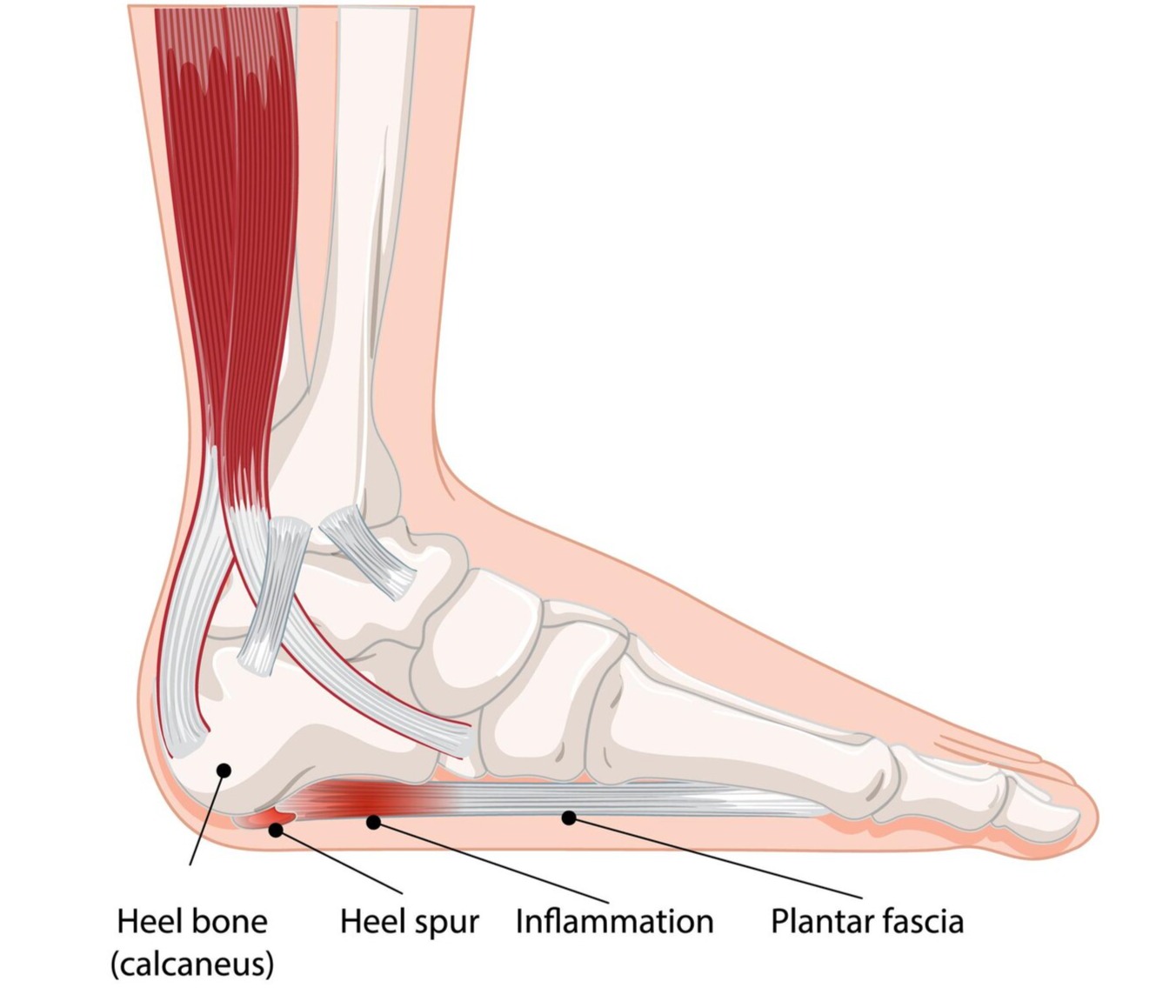
Under your foot sits a tough, strap-like ligament that stretches from the heel to the base of the toes. It keeps your arch from collapsing and softens the impact every time your foot lands. When that ligament gets overloaded and starts to break down, the sharp, localised heel pain known as plantar fasciitis follows.
In Singapore, this shows up a lot in people whose day-to-day puts steady load through the foot: retail and F&B staff on their feet across long shifts, healthcare workers doing hospital rounds in flat-soled shoes, and runners logging kilometres along the park connectors, especially after a jump in mileage or a switch to a less-cushioned shoe. None of that is a diagnosis on its own, but the pattern is a familiar one to anyone who treats this condition regularly.
Left unaddressed, the constant strain can also produce a heel spur, a small bony growth that develops where the fascia keeps pulling at the heel bone.
Two Ways to Approach Surgery
Most people never need surgery for plantar fasciitis. For those who do, the two established techniques differ mainly in how the surgeon gets to the fascia.
Open surgery
This is surgery is the older, more direct method. It’s performed in a hospital, sometimes under general anaesthesia, and gives the surgeon a clear, wide view of the fascia through a single larger cut.
Endoscopic surgery
It goes in through a couple of small incisions instead, guided by a camera, and typically only needs local anaesthesia. Less tissue disturbed generally translates to a smoother early recovery, though the right choice still comes down to your individual case.
None of these alone settles the question. Only a proper orthopaedic assessment, weighing your symptoms, exam findings, imaging, and how you’ve responded so far, can determine whether surgery is the right call for you.
What the Surgical Process Involves
Assessment & planning
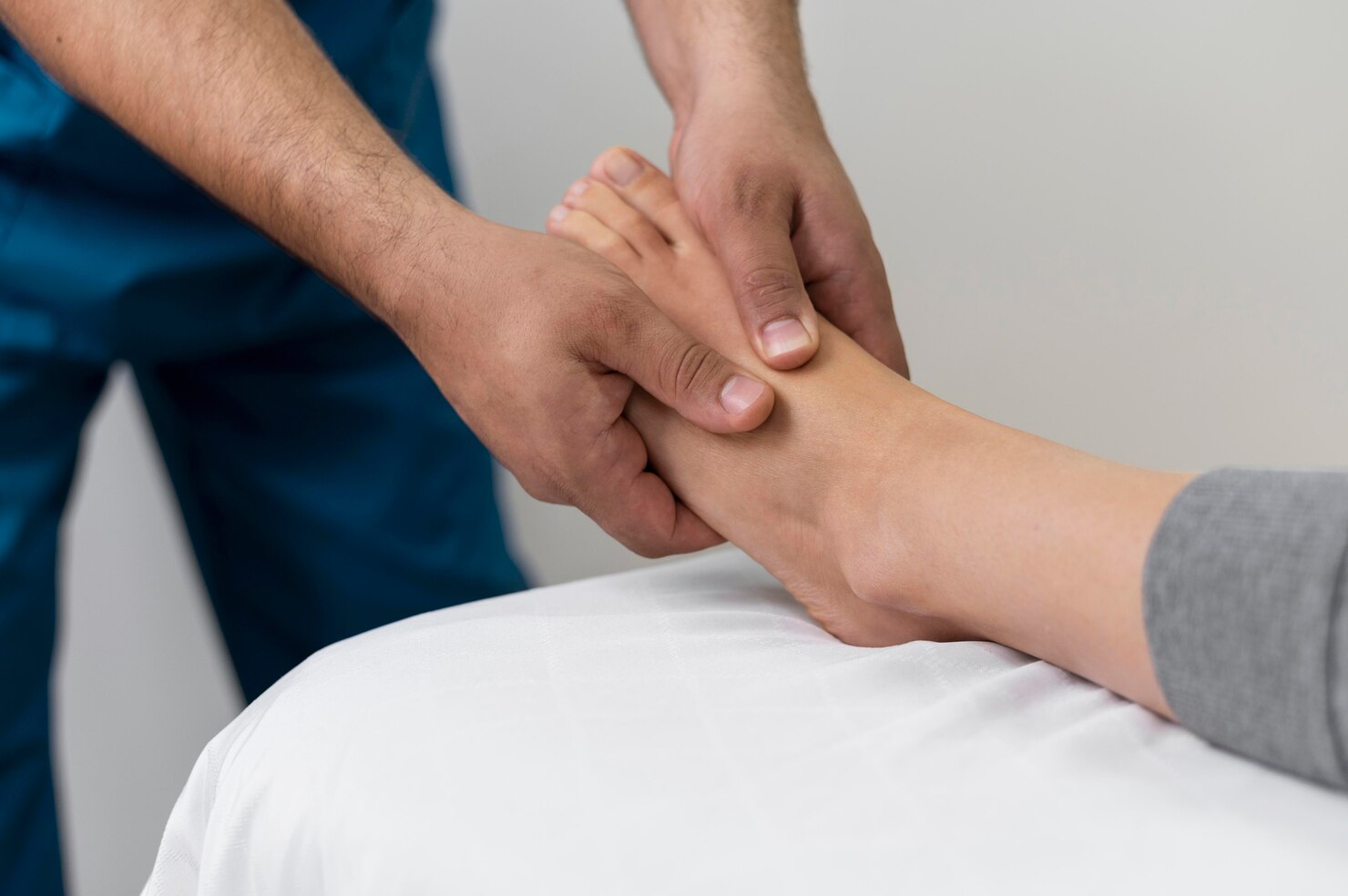
Before any decision is made, your surgeon will go through your history, examine the foot by hand, often pressing along the sole to map exactly where the pain sits, and order X-rays if a bone spur is suspected.
The procedure
On the day, whichever technique is used, the operation itself is generally over within the hour. Anaesthesia is matched to the approach: general for open surgery in most cases, or local anaesthesia with sedation for the endoscopic route, and your surgeon will talk this through with you beforehand rather than deciding it on the spot.
Protection & recovery
Afterwards, your foot stays elevated for a stretch to keep swelling and fluid buildup under control, and you'll be in a walking boot, cast, or stiff-soled shoe for several weeks while the tissue knits back together. Desk-based patients often find they can manage light office work sooner than someone whose job keeps them on their feet all day, though your surgeon's specific sign-off is what matters, not a general rule of thumb.
Could This Be Right for You?
A few patterns tend to bring people in for an assessment:
- Runners or weekend athletes noticing heel pain creep in after training loads or match days
- Nurses, teachers, retail staff, and others clocking long hours standing on hard flooring
- Heel pain that hasn’t budged despite a genuine stretch of rest, icing, taping, and physiotherapy
- Symptoms that are now shaping how you walk, and starting to pull at your knees or lower back too
- Anyone who’s already been through non-surgical care and is being considered for the next step
- A bone spur or noticeably thickened fascia that imaging keeps confirming
Recovery After Plantar Fasciitis Treatment
Recovery timelines vary a fair amount from person to person, shaped by which technique was used, how much fascia damage there was, any other injuries involved, and simply how your body heals.
Expect a protected phase first, boot, cast, or stiff-soled shoe, before easing back into normal weight-bearing. Physiotherapy usually picks up from there, working on regaining movement, strength, and flexibility in a structured way.
Getting back to work, training, and sport should happen in stages, paced by your surgeon or physiotherapist rather than by how you feel on any given day. Sticking with post-op instructions and turning up to follow-ups makes a real difference to how smoothly this goes.

About Your Orthopaedic Specialist
Dr. Gowreeson Thevendran
MBChB (Bristol) · MRCS.Ed · Dip. Sports Med.Ed · FRCS.Ed (Trauma & Ortho.) · FAMS (Singapore)
Dr Thevendran’s practice centres on lower limb orthopaedic conditions, along with trauma and fracture surgery across both the upper and lower limbs. He studied medicine at the University of Bristol and went on to complete surgical training in the UK and Canada.
Prior to going into private practice, he led Foot & Ankle Surgery within the Department of Orthopaedics at Tan Tock Seng Hospital, Singapore.
Questions patients ask
FAQs
What actually works for managing plantar fasciitis?
For most patients, it comes down to the basics done consistently: rest, ice, compression, elevation, anti-inflammatory medication, and physiotherapy. When that combination doesn’t fully settle things, a specialist can walk through what else might help.
When does this need a specialist's eyes on it?
If the pain won’t ease up, particularly first thing in the morning or after sitting still, it’s worth booking an assessment. That goes double if you’re an athlete or spend most of your day on your feet.
What happens if it's just left alone?
It tends to settle into a long-running problem rather than resolve on its own, with pain that keeps interrupting ordinary activities. And because people naturally start walking differently to dodge the pain, knees, hips, and backs often end up carrying the consequences.
What could go wrong with surgery?
As with any procedure, there’s a risk of infection, nerve damage that can leave numbness behind, and scarring. In more complicated cases especially, there’s also a chance the surgery doesn’t fully resolve the pain, or it returns later.
Does MediSave or insurance cover this?
That depends on which procedure is involved and the specifics of your own policy. The clinic can confirm MediSave eligibility and insurance coverage directly before you commit to treatment.
Still Living With Heel Pain?
If it’s still there, or still limiting what you can do despite what you’ve already tried, an orthopaedic assessment can get to the bottom of it and lay out what’s actually available to you.